Recognizing Peptide Pureness: What 99%+ Actually Means
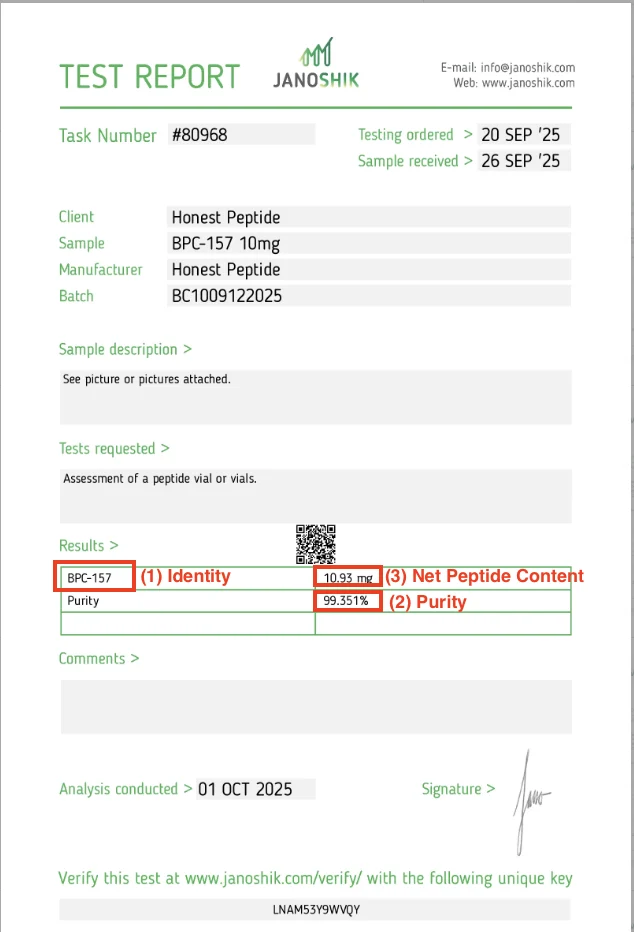
At minimum, identity and pureness need to be verified per batch. Suppliers who give the same COA for Article source months of manufacturing are not demonstrating appropriate quality assurance. The procedure functions by passing the peptide solution via a column loaded with specialized material. Different compounds communicate with this product in different ways, triggering them to emerge from the column at various times. A detector determines what comes out, generating a chromatogram showing heights for each compound existing.Is 95% purity helpful for peptides?
Peptides with an 85% purity level or better are generally utilized in enzyme assays or organic task studies. Peptides with purity above 95% are superb for measurable evaluation.
What's The Distinction Between Vendor Coa And Third-party Screening?
Yet these COAs often originate from the supplier's very own testing, producing an obvious dispute of interest. Even when suppliers assert third-party testing, verifying those cases calls for initiative most customers do not make. Scientists often assess mass spectrometry results along with HPLC information to develop an extra complete understanding of product top quality. As the research peptide industry remains to grow, understanding how peptide pureness screening works can assist scientists make even more informed sourcing choices and much better assess provider openness. Contaminations aren't simply non-active fillers; they Click here for more can actively disrupt your work.Exactly How Is Peptide Pureness Measured? (hplc And Mass Spectrometry)
Attaching you with relied on peptide suppliers and suppliers, guaranteeing top quality, reliable items for research and development demands. Explore our curated choice for pureness, uniformity, and regulative conformity. COAs for Palmetto Peptides items are available on individual product pages.- Peptide pureness is essential for exact research and safe medication advancement.We can walk through the logical data for any kind of compound in our catalog.Finnrick offers comprehensive relative information throughout vendors.Identification screening asks whether the gauged mass or sequence-related proof matches the intended peptide.Third-party screening gets rid of problem of rate of interest and gives the scientist objective, empirical data-- not advertising and marketing cases.